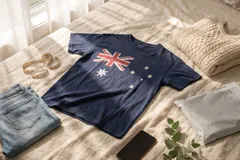
Flat-lay, model, or mannequin: which sells best?
The four ways to show secondhand clothing, flat-lay, on a hanger, on a model and on a mannequin, and how to pick the one that sells each item fastest.
- Words by
 The Vintsnap team
- Published
- Reading time
- 4 minutes
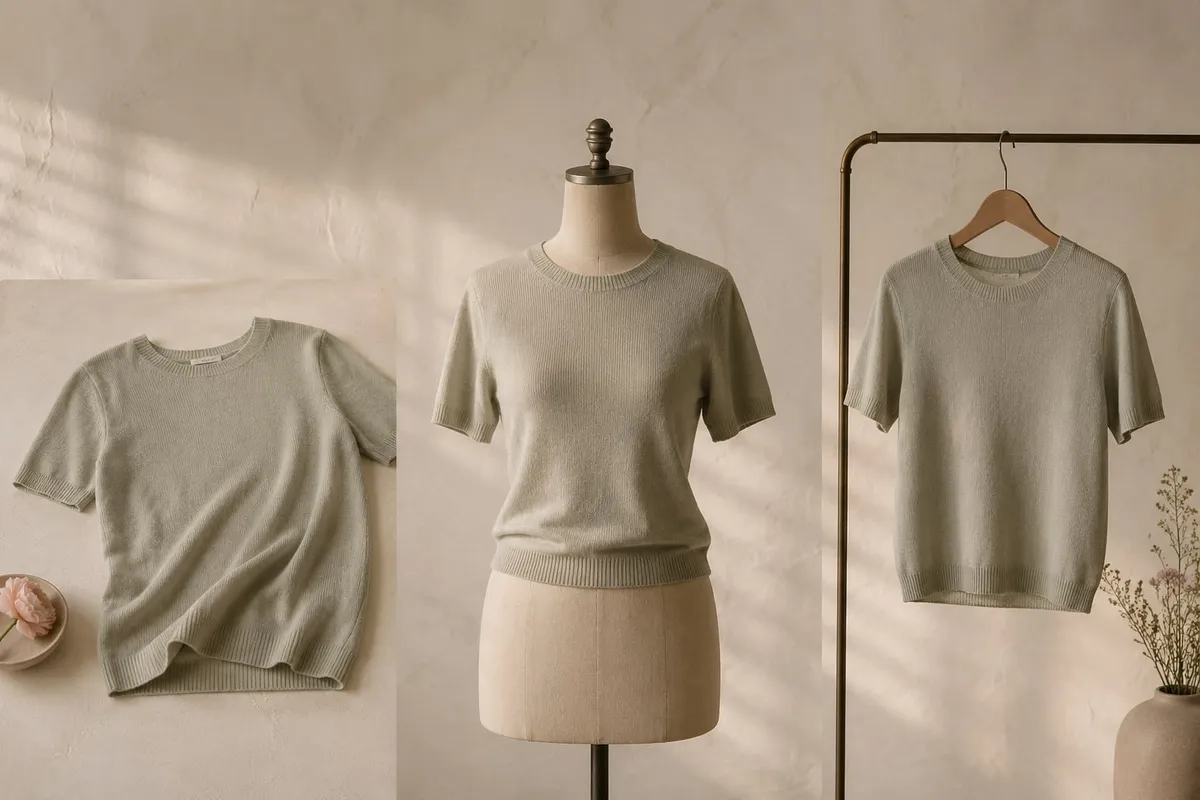
The same garment can look like a bargain or a steal depending on how you photograph it. Show a dress flat on the floor and a buyer has to imagine it. Show it on a body and they can see how it falls. Neither is wrong, but they sell at different speeds, and the right choice depends on the item.
Here is how the four common approaches compare, and when to reach for each.
Flat-lay
A flat-lay is the garment laid out flat and shot from directly above. It is quick, it shows the true shape and colour, and it works especially well for pieces where fit is not the main question: knitwear, t-shirts, denim, and most accessories.
The strength of a flat-lay is honesty. Nothing is stretched over a form or pinned to flatter, so what the buyer sees is what arrives. The weakness is that it asks the buyer to do the imagining. A structured blazer or a draped dress laid flat can look shapeless, which undersells it.
Lay the piece on a plain surface, smooth out the creases, square it to the frame, and shoot straight down in good light — our guide to photographing clothes without a studio covers getting that light from just a window and a phone.
On a hanger
Hanging a garment is the fastest way to show drape and length. It suits coats, shirts, dresses and anything with structure that collapses when laid flat. A hanger photo reads as quick and practical, which is fine for most resale.
The downside is that hangers can distort the shoulders and leave the piece looking limp against a wall. Use a slim, matching hanger, shoot against a clean background, and steam or smooth the fabric first so it hangs properly.
On a model
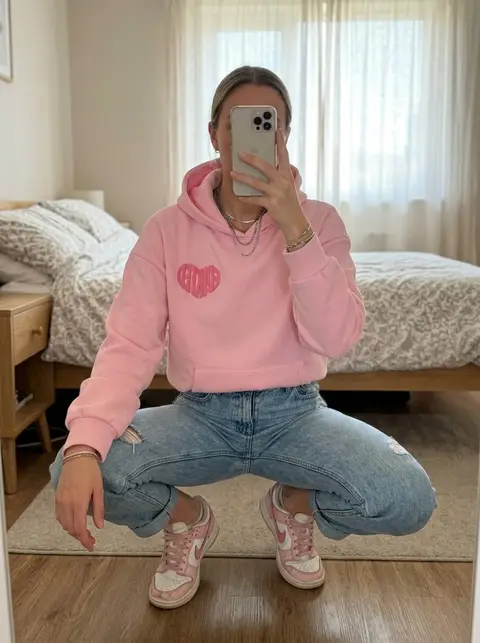
Showing a garment worn is the most persuasive option for anything where fit and movement matter: dresses, tailoring, trousers, anything fitted. A buyer can see the length, the cut and how the fabric sits on a real body, which removes the biggest reason people hesitate, and the biggest reason they return.
The cost is effort. Modelling your own items means setting up, changing, and shooting in a mirror or with a helper, and not everyone wants to be in their listings. It is the highest-converting option and the most work.
Vintsnap Your photo
 Vintsnap
The same hoodie, photographed flat then shown on a model.
Try VintsnapOn a mannequin
A mannequin sits between a hanger and a model. It holds the garment in a body shape so the buyer can read the fit, without anyone having to appear in the photo. It is the standard for shops that want a consistent, professional look across a large catalogue.
There is also a more polished version worth knowing about: the ghost mannequin, sometimes called the invisible mannequin. Here the garment is photographed on a form, and the form is then edited out, so the piece appears to hold a body shape with nothing inside it. It is the clean, floating look you see on most high-street websites. It reads as professional and keeps the focus entirely on the item, which is why buyers associate it with established shops rather than one-off sellers.
How to choose
A rough rule of thumb:
- Fit is the main question (dresses, tailoring, fitted tops, trousers): on a model, or a mannequin.
- Shape and drape matter, fit less so (coats, shirts): on a hanger or a mannequin.
- Fit is not really the point (knitwear, tees, denim, bags, shoes, accessories): a clean flat-lay.
The other factor is consistency. Whatever you choose, using the same approach across a category makes your shop look deliberate, and a deliberate shop sells better than a stronger individual listing surrounded by chaos.
You do not have to pick just one
The honest answer is that most items benefit from more than one of these, a clear full view plus the angle that flatters the piece, and shooting every item several ways by hand is exactly the work that makes listing slow.
Vintsnap lets you take one quick photo and choose how each piece is shown: worn on a model, on a mannequin, on a hanger, or as a clean flat-lay, all in a consistent style, without setting any of it up. You can try a few looks for the same item and post the one that suits it. (An invisible, ghost-mannequin look is on our list, too.)