How to take photos for Depop that actually sell
On Depop, your photos and feed are the shop. Here's how to shoot clothing that stops the scroll, makes your profile look like a brand, and sells faster.
- Words by
 The Vintsnap team
- Published
- Reading time
- 5 minutes
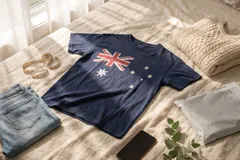
Depop sells differently to most marketplaces. Buyers are not just shopping for a jumper, they are shopping for a look and a shop they want to follow. That changes what a good photo has to do. It is not enough for an image to be clear and well lit. It also has to say something about the piece, and it has to sit alongside your other listings without looking like it wandered in from somewhere else.
Get that right and Depop rewards you twice: stronger individual listings, and a profile grid that turns a browser into a follower. Here is how to photograph for it.
Treat your profile as the real product
Most selling advice stops at the single listing. On Depop, the grid of thumbnails on your profile is doing as much work as any one photo. A buyer who likes one of your pieces almost always taps your username to see the rest, and what they find there decides whether they follow, bundle, or leave.
That means consistency is not a nice-to-have, it is the whole game. A grid where every item is shot on the same background, in the same light, at the same distance reads instantly as a shop with a point of view. A grid of mismatched photos, some bright, some dim, some flat-lay, some blurry mirror shots, reads as a random pile, even when the clothes are good. Before you worry about any single image, decide what your grid should look like, and shoot every piece to fit it.
Lead with the look, not the lab shot
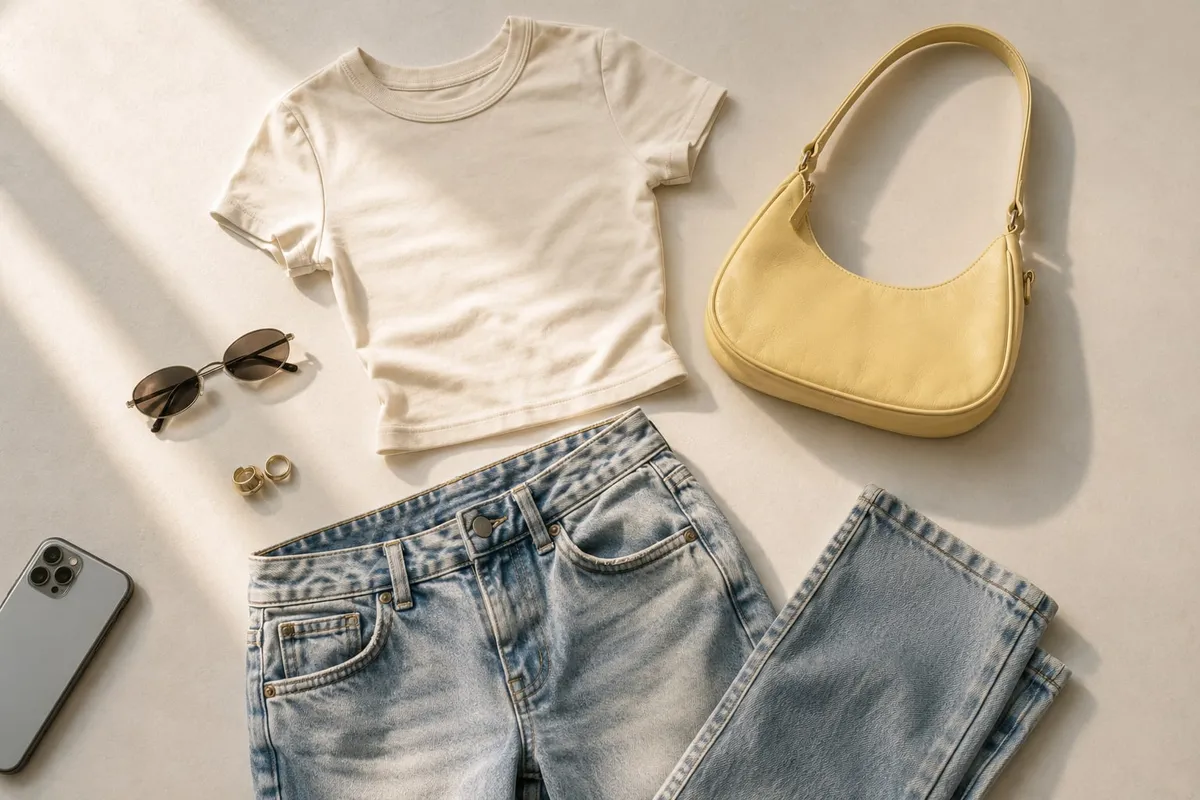
A clinical, evenly lit photo of a garment laid flat is honest, and it has its place further down your listing. But the opening image on Depop usually works harder when it shows the piece with a bit of intent: styled into a small outfit, worn, or arranged so a buyer can picture wearing it themselves.
This is where Depop diverges from somewhere like eBay. You are selling the fantasy of the outfit as much as the item. A baby tee photographed with the jeans and the bag it would go with tells a story a lone tee on the carpet does not. You do not need a model or a studio for this. A considered flat-lay that groups the piece with a couple of complementary items, or a simple worn shot, gives the buyer the styling cue that makes them want it.
Vintsnap Your photo
 Vintsnap
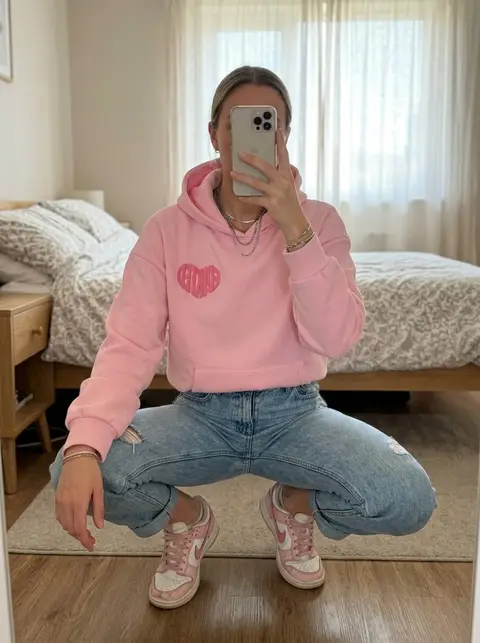
The same hoodie, photographed flat then styled on a model.
Try VintsnapSave the plain, fills-the-frame full view and the close-ups for the photos that follow. Lead with the one that makes someone stop scrolling.
Light it well, then resist over-filtering
Depop has a strong visual culture, and a lot of it leans on a warm, slightly faded, film-camera look. There is nothing wrong with a consistent edit that becomes part of your shop’s signature. The danger is when the filter starts lying about the item.
The rule is the same as anywhere: shoot in daylight near a window, turn the overhead bulb off so the colours stay true, and avoid hard direct sun. Then, if you edit, keep it light and keep it honest. A buyer who receives a top that is greyer, brighter or a different shade than the photo promised leaves a poor review, and on a profile-driven platform like Depop a couple of those visibly drag down everything else you list. Edit for mood, not to disguise. If the real colour matters, and on clothing it always does, the photo has to match what arrives.
Make your background your signature
Because the grid matters so much, your background is one of the simplest ways to make your shop recognisable. Pick one surface or setting and reuse it relentlessly: a particular wall, a wooden floor, a single coloured sheet, a tiled bathroom, whatever suits the aesthetic you are going for. The specific choice matters far less than the repetition.
Keep it plain and keep it clear of clutter, the same as any listing photo, but here you are also building a visual identity. A buyer who scrolls past three of your listings in their feed and sees the same calm, consistent backdrop each time starts to recognise you before they have even read your name. That recognition is what turns one sale into a follow, and a follow into a bundle.
If you are weighing up whether to shoot flat, on a hanger or worn for a given piece, our guide to flat-lay, on a model, or mannequin walks through which suits what.
Where the consistency gets hard
Everything above is straightforward for one item. The trouble starts at volume. Shooting the tenth piece in the exact same light, on the same background, at the same distance as the first is the part that quietly falls apart. The sun moves, you get tired, you shoot one in a different room, and slowly your grid drifts out of step with itself. The shops that look most professional on Depop are usually the ones that solved consistency, not the ones with the fanciest single photo.
Vintsnap is built for exactly that problem. You take one quick photo of a piece wherever it is, in whatever light you have, and it returns a clean, studio-style listing photo with the background and lighting handled and every item in the same look. Choose a flat-lay, a hanger or an on-a-model shot per piece, and the whole grid stays coherent without you setting anything up. The styling stays yours. The grind of keeping forty listings looking like one shop stops being your job.