Vinted has launched in Australia: what it means for sellers
Vinted launched in Australia on 1 July 2026. How the zero seller fees work, how Australia Post handles postage, and how to build a listing that sells.
- Words by
 The Vintsnap team
- Updated
- Reading time
- 13 minutes
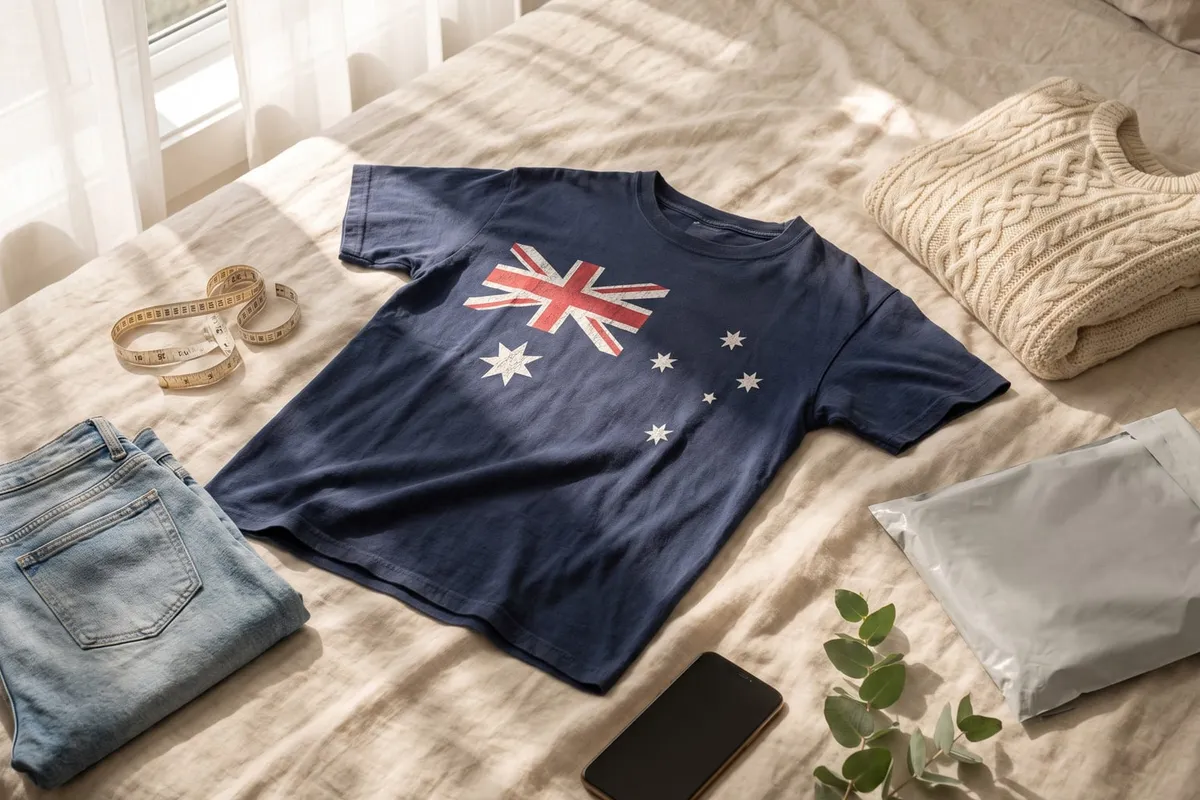
Vinted opened to Australian buyers and sellers on 1 July 2026. Australia is its twenty-seventh market.
The rollout was quiet. Listings appeared, the site started working, and the marketing followed later. The structure behind it is not quiet at all. Australia Post signed a three-year deal as the exclusive delivery partner, so every Vinted parcel in the country moves through the postal network Australians already use.
For anyone with a full wardrobe and a vague intention to do something about it, the economics are the interesting part. Vinted charges sellers no listing fee and no commission. What you agree to is what lands in your balance.
What launched, and what it costs
Vinted was founded in Lithuania in 2008. Its stated mission is to make second-hand the first choice.
The Australian catalogue reaches well beyond clothing:
- Adult fashion — the centre of the marketplace
- Homewares and electronics
- Entertainment, collectibles and sports gear
The timing is not accidental. Australia Post research found that 46 per cent of Australians now shop second-hand. A study commissioned for the launch reported that 88 per cent have items at home they could sell. Vinted’s pitch is that the gap between those numbers is friction.
The fees, plainly
This is where Vinted differs most from what Australian sellers are used to.
- Sellers pay nothing. No listing fee. No commission. No payment-processing cut. A $40 sale pays you $40.
- Buyers pay a Buyer Protection fee at checkout. It funds the cover for items lost, damaged, or badly different from the description.
- Buyers pay postage, also at checkout.
One consequence catches new sellers out. Your listed price is not the number the buyer sees at the till. They see the item, plus protection, plus postage.
Price with that total in mind. It matters most on cheap items, where the extras are proportionally largest. A $6 top can land near $15 delivered. That is often the difference between a sale and a scroll.
Vinted sets the Buyer Protection rate and can change it. Check the current figure at checkout rather than trusting a number from a blog post.
Australia Post carries every parcel
Under the three-year deal, Australia Post handles all Vinted shipping in Australia. That gives you:
- More than 4,000 post offices
- The free 24/7 parcel locker network
- Street posting boxes, where the parcel is eligible
- Home delivery, if the buyer prefers it
The seller flow is short. An item sells. You get the postage label through the app. You pack the parcel and drop it off. The buyer already paid for that postage, so nothing comes out of your sale.
The UK corridor
The launch also opened a shipping corridor between Australia and the United Kingdom, powered by InPost. You can buy from UK wardrobes and sell into them. Vinted handles the customs paperwork and duty.
Reported limits at launch:
- Parcels must weigh 2 kg or less
- Australia to UK: items under £110
- UK to Australia: items under A$920
- All measured before Buyer Protection, shipping and tax
Those thresholds are Vinted’s to change. Confirm them in the app before counting on a cross-border sale.
For an Australian seller, the corridor quietly widens the audience for anything the local market undervalues. British high-street labels. Vintage that reads better in the UK. Niche sizes with a thin pool of local buyers.
How to put a listing together
Listing is easy enough that the temptation is to rush it. Sellers who do well treat it as a routine, not a creative act.
Work in batches. Prepare five or ten items. Photograph all of them. Then sit down once to measure and write. Constant task-switching is what makes listing feel like a chore.
1. Prepare the garment
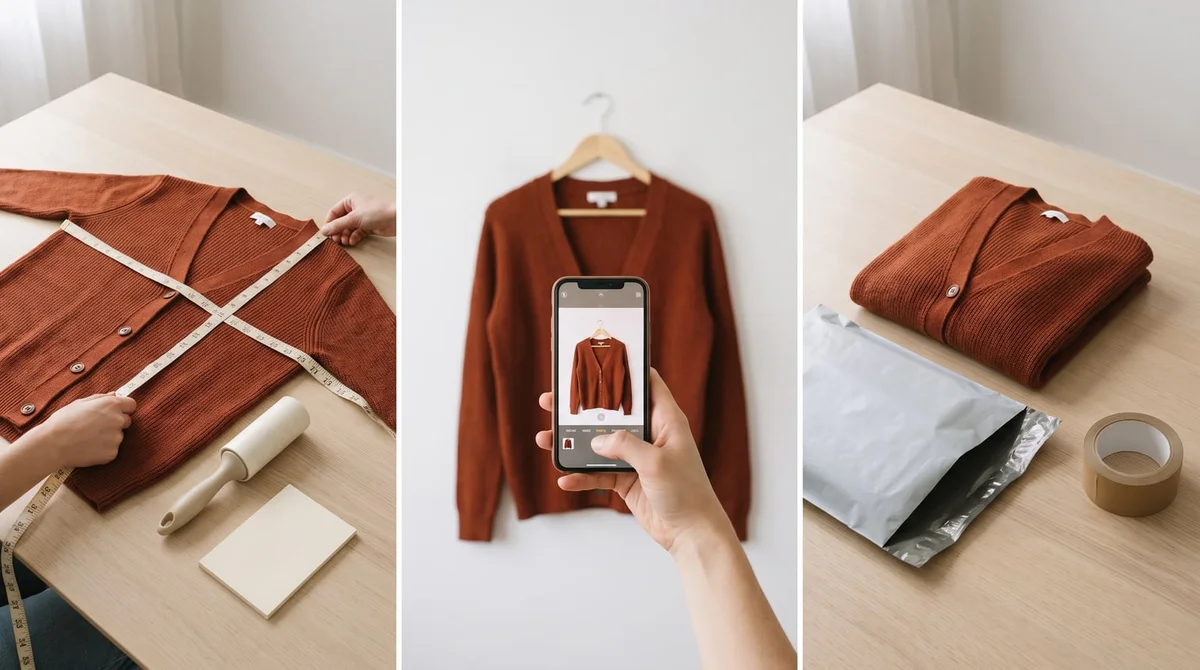
Do this before the camera comes out:
- Empty every pocket and check the lining.
- Roll off lint and pet hair.
- Fasten buttons and zips so the shape reads correctly.
- Steam out the creases the fabric will allow.
- Find the brand, size and care labels.
- Note every flaw — pilling, marks, repairs, fading, missing hardware.
Write the flaws down now. You are going to disclose all of them, and remembering later is slower.
2. Photograph it
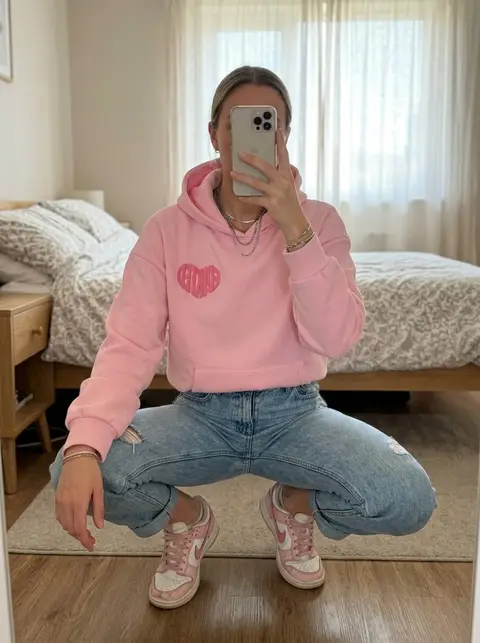
A Vinted listing lives or dies on its images. The first photo decides whether anyone stops scrolling. The rest decide whether they trust you.
Vinted allows up to 20 photos. Six to eight good ones beat twenty repetitive angles.
| Position | Photograph | What it proves |
|---|---|---|
| 1 | Full garment, cleanly framed | Shape, colour and overall appeal |
| 2 | Full back view | The whole item, not just its best side |
| 3 | Brand and size label | Brand, labelled size, authenticity clues |
| 4 | Care label | Fibre content and washing instructions |
| 5 | Texture or construction detail | Fabric, stitching, buttons, print quality |
| 6 | Every flaw | Honest condition, and fewer disputes |
| 7 | Key measurement | Scale, where sizing is inconsistent |
| 8 | Hanger, mannequin or worn view | Shape and drape |
Too much light is a problem too
Two things ruin clothing photos. Most advice only covers the first.
Too little light is the familiar one — a dim room, warm bulbs, a phone straining to cope. That happens everywhere.
Too much light is the other. Direct sun is far too harsh for clothing. It blows out the highlights on pale fabric. It drops hard black shadows across the garment. It flattens texture into glare.
Photograph a linen shirt on a sunny balcony at midday and you lose the exact weave a buyer is trying to assess. Shooting through a window at noon does much the same. With more clear days than most of Europe gets, it is an easy mistake to make here.
What works instead:
- Open shade, or an overcast day
- A window the sun is not currently coming through
- Early morning or late afternoon, rather than the middle of the day
- A sheer curtain over a bright window — it turns hard light into usable light for nothing
- Ceiling lights off. They turn whites yellow and navy black, and mixing them with daylight gives a cast that is hard to correct honestly
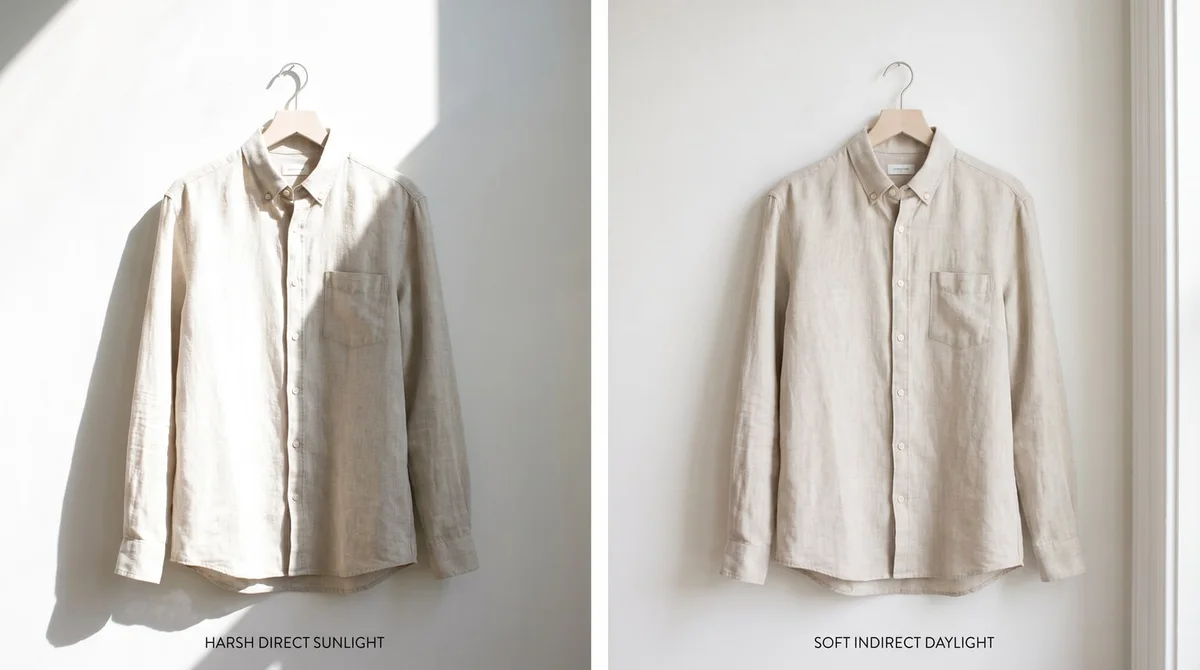
Tap the garment on your phone screen to set focus and exposure. Then hold the phone beside the item and compare. If the screen and the garment disagree, the buyer finds out on arrival — not you.
Keep the colour true
Do not push brightness and saturation until the item becomes a different garment. Rust should not arrive as red. Sage should not arrive as mint.
A striking photo that triggers a return is worse than a plain one that sets accurate expectations.
Vintsnap Your photo
 Vintsnap
A quick photo at home and a cleaner lead image. Keep the original front, back, label and flaw photos in the same listing so a buyer can verify the real garment.
Try VintsnapWhere enhanced images are and are not fine
Vinted requires listing photos to show the actual item in its real condition. Stock photos and images taken from other websites are prohibited. Vinted’s commercial-selling guidance also notes that standardised professional product photography can read as business activity rather than a personal clear-out.
So improving your own lead image is reasonable, as long as the garment stays truthful. The rules of thumb:
- Do pair the lead image with original front, back, label, detail and flaw shots.
- Don’t edit away a stain, alter a cut, or invent a label.
- Don’t substitute a model shot for evidence of condition.
- If unsure, lead with the original and check the Help Centre.
That is the job Vintsnap does. You photograph the garment you are actually selling, pick a look, and it returns a clean studio-style version of that same piece — true colour, same cut, no backdrop or editing skills needed. Use it as the lead image, and let your original front, back, label and flaw shots carry the evidence.
Our guides on photographing clothes without a studio and choosing between flat lay, mannequin and model go further.
3. Write a title buyers search for
Titles are search queries, not slogans. Buyers type concrete nouns.
Follow this order: brand, garment type, defining detail, labelled size, colour.
Gorman cotton midi dress, AU 12, floralLevi's 501 straight jeans, W28 L30, mid blueUnbranded merino cable-knit jumper, M, cream
Fill the structured brand, size, condition and colour fields too. Filters only work when those fields are right.
Resist padding the title with unrelated brands. Inaccurate brand references can get a listing hidden.
4. Write the description like a handover note
Use this order:
- One sentence on what the item is and how it fits.
- Labelled size, then measurements.
- Material, from the care label.
- Condition, with specific wear named.
- Anything included or missing.
Here is the shape of it:
Rust merino cardigan by Country Road with a relaxed fit and horn buttons. Labelled AU 12. Approximate measurements laid flat: 52 cm pit to pit, 62 cm shoulder to hem. 100% merino wool. Worn a handful of times and hand-washed. Small pull on the left cuff, shown in image 6. No spare buttons.
5. Measure it
Measurements matter more here than sellers expect. Australian, UK, EU and US sizing all circulate in the same catalogue, so a labelled size settles nothing.
- Tops: pit to pit, shoulder to hem
- Trousers: waist laid flat, rise, inside leg
- Say the measurements are approximate and taken flat
6. Price it against evidence
What you paid explains your attachment to an item, not its market value.
- Search the same brand and garment in comparable condition.
- Weight sold prices above hopeful asking prices.
- Remember the buyer sees your price plus protection plus postage.
Decide three numbers before you list: the asking price, an offer you would accept, and your firm floor. That way you are not negotiating on instinct at 11pm.
7. Pack and post it
- Keep packaging ready before your first sale.
- Reused satchels are fine when strong, dry and clear of old barcodes and addresses.
- Print the label from the app, or scan the code at a parcel locker.
- Drop off at a post office, parcel locker or eligible street posting box.
- Post within a day or two.
Slow dispatch is the most common complaint against otherwise good sellers. It is entirely within your control.
8. Reply, then repeat
Answer questions with the specific measurement asked for, not a sales pitch. Then list the next item.
Your first fortnight
A new marketplace rewards early sellers with attention it will not hand out as freely later. The Australian catalogue is still thin in most categories, so good listings surface easily right now.
- List ten items rather than one. A stocked wardrobe reads as a real seller and encourages bundles.
- Photograph everything in one session, in indirect daylight, before you write anything.
- Fill every structured field. Filters are how buyers find you.
- Have packaging ready before the first sale.
- Post within a day or two, every time.
Common questions about Vinted Australia
- When did Vinted launch in Australia?
- Vinted opened to Australian buyers and sellers on 1 July 2026, making Australia its twenty-seventh market. The rollout was low-key, with listings appearing before any significant marketing campaign.
- Does Vinted charge sellers a fee in Australia?
- No. There is no listing fee, no selling commission and no payment-processing cut. If an item sells for $40, you receive $40. Vinted earns from the Buyer Protection fee paid by the buyer at checkout.
- Who pays for postage on Vinted Australia?
- The buyer pays postage at checkout. The seller gets the label through the Vinted app and drops the parcel off, but the cost does not come out of the sale.
- How do I post a Vinted parcel in Australia?
- Australia Post carries every Vinted parcel under a three-year exclusive agreement. You can drop off at more than 4,000 post offices, at a free 24/7 parcel locker, or at an eligible street posting box.
- Can I sell from Australia to the UK on Vinted?
- Yes. The launch opened a corridor between Australia and the UK powered by InPost, with Vinted handling customs. At launch, parcels had to weigh 2 kg or less, items sent to the UK had to be worth under £110, and items coming the other way under A$920, all measured before Buyer Protection, shipping and tax. Confirm current limits in the app.
- What can I sell on Vinted in Australia?
- Adult fashion is the centre of the catalogue, alongside homewares, electronics, entertainment, collectibles and sports gear. Check the current catalogue rules before listing restricted categories.
For the complete workflow, our guide to selling on Vinted covers offers and bundles in more depth. How to take photos for Vinted goes deeper on the photo set.