Vinted vs Depop in the UK: which one should you sell on?
Vinted takes no seller fees; Depop UK still charges 2.9% + 30p. The real costs, who buys on each app, what sells where, and the photos each one needs.
- Words by
 The Vintsnap team
- Updated
- Reading time
- 11 minutes
Ask ten British resellers whether Vinted or Depop is better. You will get ten confident, contradictory answers.
That is because the honest answer depends on what is in your wardrobe. The two apps look similar — photograph a garment, price it, post it. They run on different economics, attract different buyers, and reward completely different photographs.
This comparison is for UK sellers specifically. Fee structures and tax reporting rules differ by market.
The fees, side by side
Both platforms advertise “no selling fees”. For a UK seller, that phrase covers two different realities.
| What you pay | Vinted | Depop (UK) |
|---|---|---|
| Listing fee | None | None |
| Selling commission | None | None (removed July 2024) |
| Payment processing | None | 2.9% + £0.30 per transaction |
| Optional promotion | Bump listing | Boost, 12% of item price |
| What the buyer pays extra | Buyer Protection fee plus postage | Postage, plus a buyer-side fee in some markets |
Payment processing is the line that matters.
On Vinted, a £30 jumper pays you £30. On Depop, the same jumper is charged 2.9% plus 30p. That percentage is calculated on the item price plus shipping plus any tax — not the item alone.
The fixed 30p bites hardest on cheap items. A £5 top loses roughly 45p, close to a tenth of the sale.
A specific warning about Boost
Depop’s Boost rose from 8% to 12% for UK and US sellers on new listings from 23 March 2026. Two things to know:
- It attaches for 28 days after a buyer interacts with a boosted listing.
- So it can still be charged on a sale that completes after you switch boosting off.
At 12% on top of processing, boosting only pays on higher-value items you are confident will sell.
Rates change on both platforms. Check the live fee pages before pricing a batch.
Who is actually on each app
Fees are the easy part. The audience is the bigger difference.
Depop skews dramatically young.
- Roughly 90% of active users are under 26
- Around 35 million registered users
- Strongest in the UK, US and Australia
- They shop for identity, and pay above the odds for a piece that fits a look
Vinted is bigger and broader.
- Past 100 million registered users
- Core age 18 to 45, fastest growth in the 25–40 bracket
- Replacing work wardrobes, buying children’s clothes, hunting a brand cheaper
- They are not shopping for a vibe. They are shopping for a thing
That difference shows up in how they search:
- Depop buyers browse, using cultural language — “90s grunge”, “dark academia coat”, “baggy skater jeans”
- Vinted buyers arrive with intent, typing brand, garment type, size, colour, then filtering
The practical consequence is simple. On Vinted you get found by getting the structured fields right. On Depop you get found by looking good enough to stop a scroll.
What sells where
| Sells well on Depop | Sells well on Vinted |
|---|---|
| Vintage band and graphic tees | Zara, H&M, Next, M&S |
| Y2K and 90s pieces | Nike, Adidas, everyday sportswear |
| Archive and rare streetwear | Children’s and maternity clothing |
| Statement outerwear | Smart-casual and workwear |
| Rare sportswear | Basics, bundles, wardrobe clear-outs |
The pattern is straightforward. Depop rewards scarcity and style. Vinted rewards recognisable brands, correct sizes and a fair price.
A £12 Marks & Spencer jumper is an easy Vinted sale and near-invisible on Depop. A genuine 90s leather jacket will sell on Vinted eventually — but Depop will find a buyer faster, and at a higher price.
The photography is genuinely different
This is what sellers get wrong when they cross-post, and it costs them sales on one platform or the other.
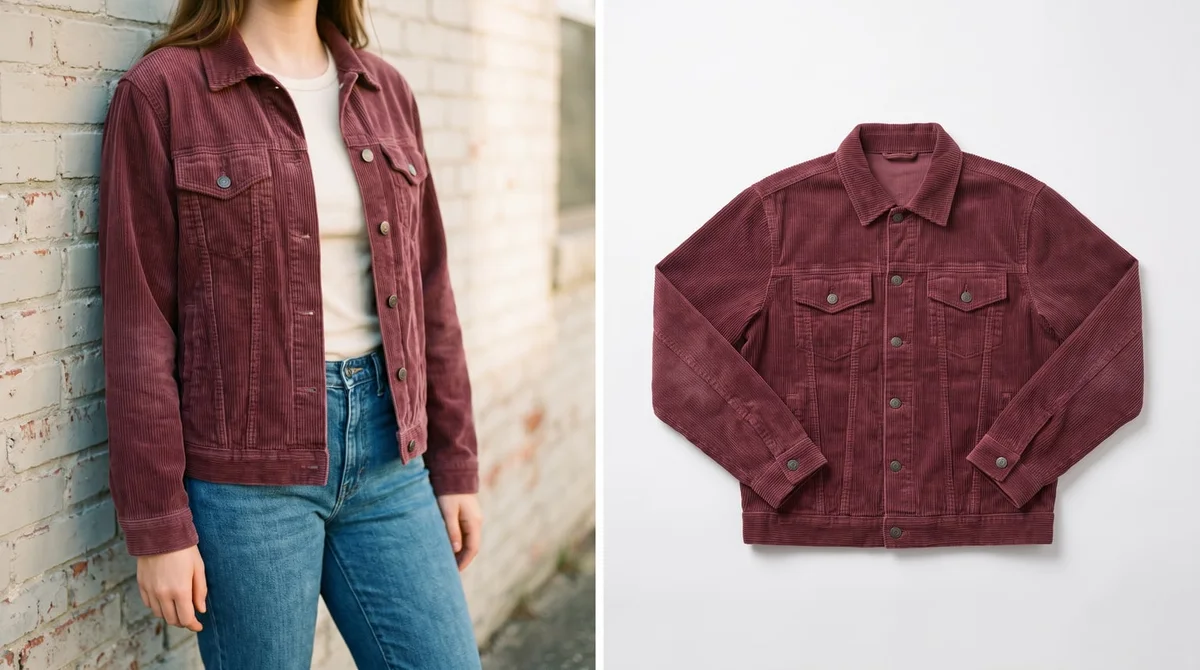
Depop rewards a styled lead image. Worn shots, real light, a sense of how the piece would be worn. The listing competes in a visual feed, so mood does real work. A flat garment on white can look inert there.
Vinted rewards a clean, legible lead image. The buyer is scanning search results for a specific item. They need to identify shape, colour and condition instantly. Atmosphere is noise. Clarity converts.
Both then need the same evidence photos behind the lead image:
- Full front and full back
- Brand and size label
- Care label
- A fabric or construction detail
- Every flaw, shot honestly
That set does not change between apps. Only the first image really does.
Depop rewards a consistent shop grid
Depop does something Vinted does not. Your shop page is a grid, and buyers judge it as a whole before they trust you.
A grid shot on a different duvet under a different lamp each time reads as someone clearing a cupboard. One background and one light reads as a shop.
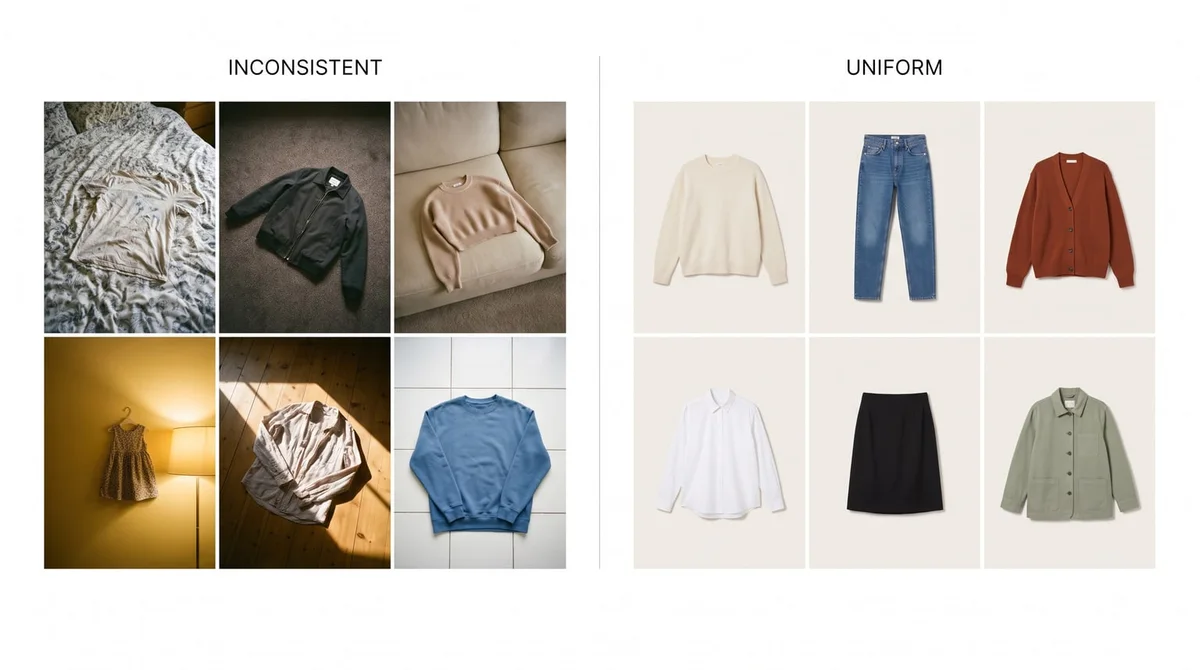
Pick one surface and one spot near a window. Shoot everything there. On Vinted this matters less for browsing, but it still makes listings quicker to produce and easier to trust.
Vintsnap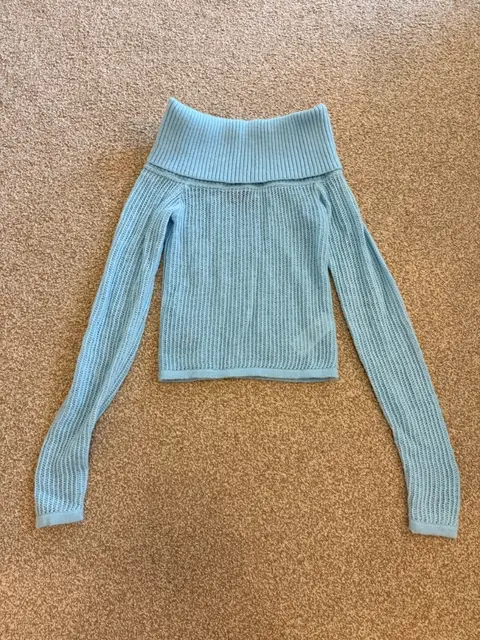 Your photo
 Vintsnap
A quick photo at home and a cleaner lead image. Keep the original front, back, label and flaw photos in the listing on either platform so a buyer can verify the real garment.
Try VintsnapBoth marketplaces require photos of the actual item in its real condition. Both prohibit stock images and photos lifted from other websites. Improve the presentation of your own garment as much as you like. Never edit away a flaw, alter a cut or invent a label.
Our guides on photographing clothes without a studio, taking photos for Depop and taking photos for Vinted cover each platform’s photo set in more detail.
Postage and admin
On Vinted the buyer chooses the courier at checkout and pays for it:
- Evri
- InPost
- Royal Mail
- Yodel
InPost orders often need no printer at all — you scan a code at the locker. That is the best reason to keep InPost enabled if you do not own one.
Depop integrates its own shipping through Evri and Royal Mail, with the label generated in the same flow as the sale. Depop also gives you more control over how you charge for postage, which matters on heavier statement pieces.
Neither is difficult. The real difference is volume. Vinted tends to produce more, smaller sales, so the packing habit matters more there.
The tax question, since both report to HMRC
Since January 2024, UK digital platforms including Vinted, Depop, eBay and Etsy report seller data to HMRC under DAC7. Reporting triggers at roughly 30 items sold, or around £1,735 (about €2,000) in a year.
Being reported is not the same as owing tax. This trips people up constantly:
- Selling your own used belongings for less than you paid is not trading. However many items you sell, it is not taxable.
- Buying or making things to sell on is trading. That income counts.
- The trading allowance gives you £1,000 of gross trading income per tax year, tax-free, with nothing to file. It applies to turnover, not profit, and covers all your side income combined.
- Over £1,000 gross from trading in 2025–26? You needed to register for Self Assessment by 5 October 2026.
The government has signalled it intends to raise the trading allowance to £3,000. As of April 2026 that had not been legislated, so £1,000 stands.
This is general information, not tax advice. Check current HMRC guidance, or speak to an accountant if you source stock to resell.
So which one?
Clearing a wardrobe of ordinary British high street clothing? Start on Vinted. Bigger buyer pool, search behaviour that matches what you are selling, and you keep every pound.
Selling vintage, rare, or anything with a look someone wants to buy into? Depop’s audience pays more. The processing fee is a small price for reaching buyers who are not price-shopping.
Most sellers with genuinely mixed stock do both, routing items by type. The vintage leather jacket to Depop. The bag of Zara and Nike to Vinted.
That means two lead images, which is exactly the work that stops people. Shoot everything once in consistent light, then produce both leads from the same session.
That is what Vintsnap is built for. Photograph the garment once, pick a look, and get a clean catalogue shot for Vinted and an on-model image for Depop from the same original photo. The garment stays the one you are actually selling, and your original front, back, label and flaw shots still do the work of proving condition.
Common questions about Vinted and Depop
- Is Vinted or Depop cheaper for UK sellers?
- Vinted. It charges sellers no listing fee, no commission and no payment processing, so you keep the full listed price. Depop removed its selling fee in July 2024 but still charges 2.9% plus £0.30 per transaction in payment processing, calculated on the item price plus shipping plus any tax.
- Is Depop's Boost worth paying for?
- Only on higher-value items you are confident will sell. Boost rose from 8% to 12% for UK and US sellers on new listings from 23 March 2026, and it attaches for 28 days after a buyer interacts with a boosted listing — so it can still be charged on a sale that completes after you turn boosting off.
- Should I sell vintage on Vinted or Depop?
- Depop. Roughly 90% of its active users are under 26 and they pay a premium for vintage, Y2K and archive pieces where the story and styling are part of the value. Vinted will sell vintage eventually, but usually slower and for less.
- Do I need different photos for Vinted and Depop?
- Only the lead image really changes. Depop rewards a styled, worn shot that stops a scroll in a visual feed. Vinted rewards a clean, legible catalogue shot that identifies the garment in search results. The evidence photos behind it — front, back, labels, fabric detail and flaws — are the same on both.
- Do Vinted and Depop report my sales to HMRC?
- Yes. Since January 2024 both report seller data under DAC7, triggered at roughly 30 items sold or around £1,735 in a year. Being reported is not the same as owing tax: selling your own used belongings for less than you paid is not trading. Buying or making things to sell on is, and the trading allowance covers £1,000 of gross trading income per tax year.
- Can I sell on both Vinted and Depop at the same time?
- Yes, and most sellers with mixed stock do. Route items by type — mainstream high street to Vinted, vintage and statement pieces to Depop. Shoot everything in one session, then produce the two different lead images from the same photos.
For the full listing workflow, our guide to selling on Vinted covers titles, descriptions, pricing and postage end to end.